
Is it safe to put customer data into ChatGPT or any AI tool?
It depends on what you put in and what you use it for. Anonymise first, use the right plan, keep names out where you can, and know the privacy rules. Andrei on the safe way and the unsafe way.

It depends on what you put in and what you use it for.
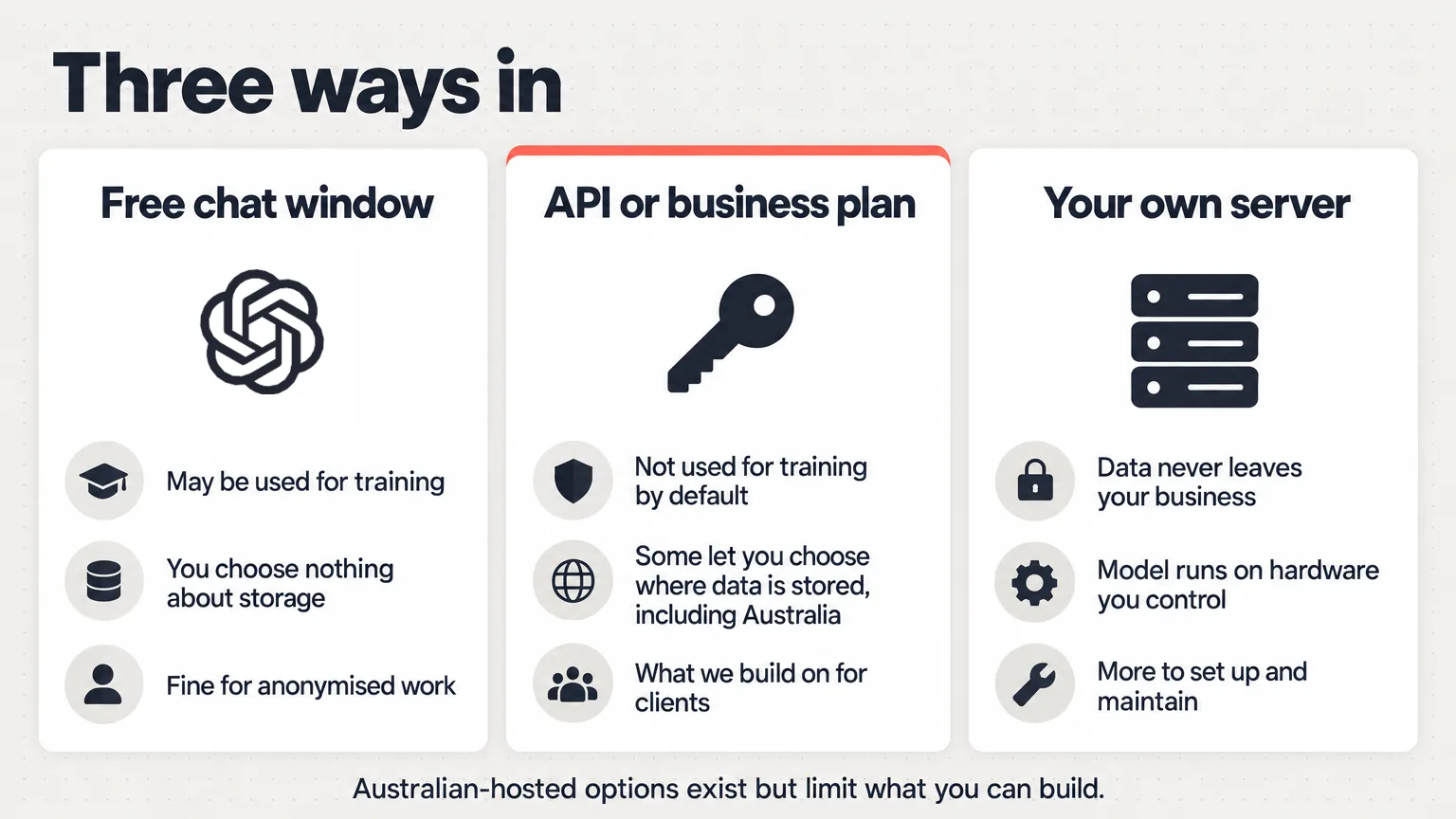
A lot of what you'd put in can be anonymised first. The AI usually doesn't need a customer's name, phone number or address to do the job, so you take those out before anything goes in. If you are dealing with sensitive or identifying information, there are ways to handle that too, but it takes more care.
It also depends on which kind of tool you're using. A free chat window is one thing. Going through an API, or a business plan, is another: the providers say they won't train on your data by default, and some let you choose where it's stored, including in Australia. Those Australian options are more limited and restrict what you can build, so I'd rather not use them unless a client needs the data to stay here.
For most businesses and most people, it isn't a problem. But privacy law adds a few considerations, and they're worth knowing about before you start. They're too much to cover properly here, so I'd point you to the Office of the Australian Information Commissioner, which has plain- English guidance.
And you don't have to use ChatGPT at all. You can run your own model on your own server, so customer data never goes to a third party.
So the safe way is to decide what goes in, use the right plan, and keep names out where you can. The unsafe way is staff pasting whatever they like into a free chat.