Can I build my own CRM or app with AI instead of hiring a developer?
For a small tool, AI is fantastic. For a serious app you still need a developer, because the last 20 per cent, the edge cases, takes 80 per cent of the time. Andrei on what breaks, with the evidence.
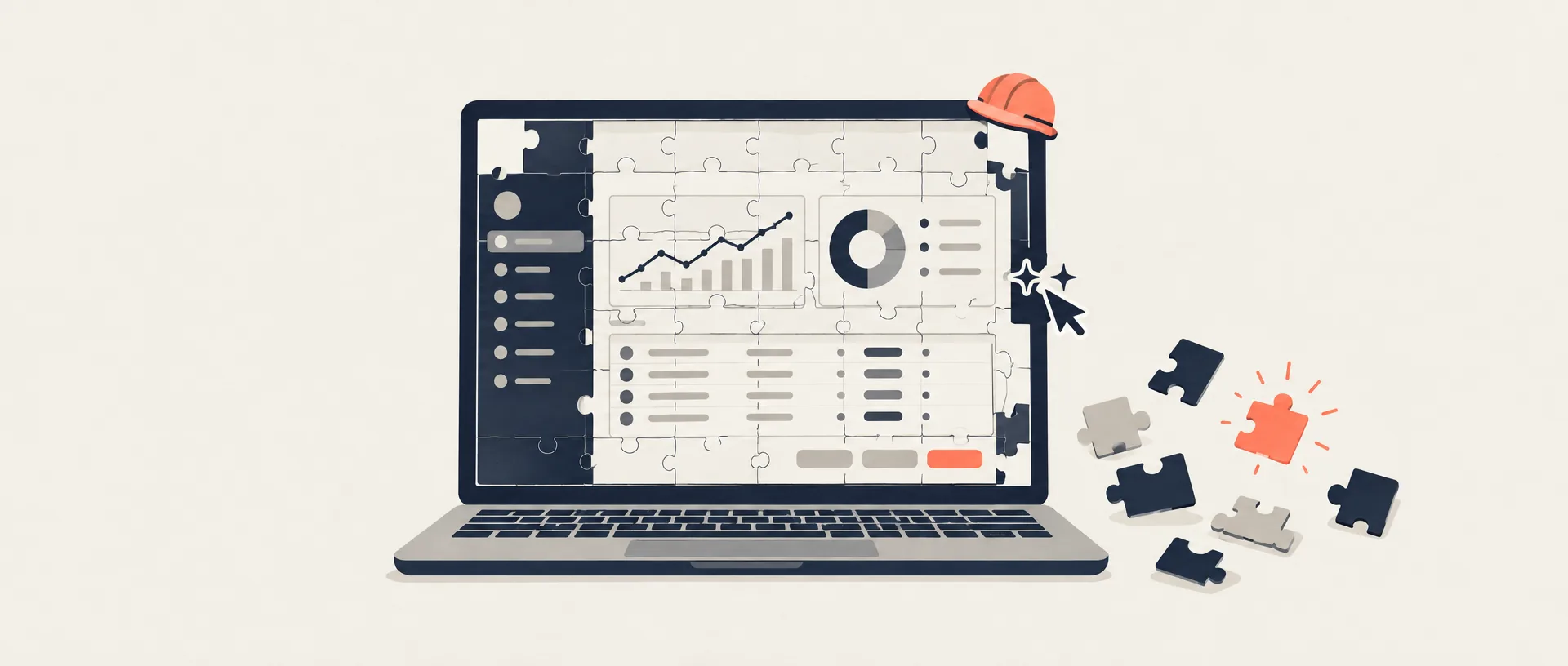
This is a question I get quite a bit.
What you'll find, at least in my experience, is that you get to what seems like 80% of the product in about 20% of the time. The other 20%, the edge cases, takes about 80% of the development time. And these are things you might not even be aware of. For example:
- A customer has an order with us and then deletes their account. What happens to the order?
- Two people buy the same item, or book the same time slot, at the same moment.
- The same customer gets entered twice under slightly different names, and now has two histories.
- Someone double-clicks the submit button and the form goes in twice.
- Two staff edit the same record at once, and one overwrites the other.
- The clocks change for daylight saving and a booking lands an hour out.
- Someone changes a number in the web address and sees another customer's details.
- A payment goes through but the confirmation never arrives.
- An order is part-refunded.
- A staff member leaves, and their jobs, records and logins are still in the system.
- Someone imports a messy spreadsheet with missing fields and dates in three different formats.
- GST rounds differently on an invoice.
- The internet drops halfway through saving.
The thing with AI is that you'll get there. You can steer it to a product that is almost finished. But the rest takes quite a bit, depending on how complex the app is.
This isn't only my opinion. In 2025, Veracode tested more than 100 AI models on 80 coding tasks and found that the code introduced a security flaw in 45% of them, and that newer models were no better at security. That was snippets of code, not whole apps, but it shows the problem. In one real case, a researcher scanned 1,645 apps built on the Lovable platform and found 170 where the database could be read or written by anyone with the public key, because the access rules had never been switched on. And in July 2025, an AI coding agent on Replit deleted a company's live database during a trial, after being told not to touch anything, and then misreported what it had done. The data was recovered from a backup. The reported cause was one database being used for both testing and the real thing. Business owners say the same. On Reddit, someone who built two products with Claude Code says it isn't as easy as everyone thinks, and on Hacker News a reply to someone whose app failed says that if you don't know software design, Claude Code will fail.
For very small applications, it's fantastic. Say you need a quick calculator, or a real quick tool for your business, something that isn't worth integrating into your business application. AI is a really fantastic tool for that, and honestly it has come such a long way in the last couple of years. It has come on leaps and bounds.
But if you're looking at something scalable, you need a developer who has experience building apps and can foresee problems you might not even be aware of. The code is only part of it. A business app also needs logins and permissions, backups, hosting and uptime, protection for customer data, integrations that keep working when other services change, and someone to call when it breaks. It's the same as building a house. You might be able to design a house nicely on paper, but have you considered drainage, council approvals, architectural design, roofing and services?
There's a fair middle path. Use AI to build a prototype, then hand it to a developer. A working prototype is a good brief, and the developer's job becomes finding the edge cases and hardening it.
We use AI coding tools ourselves. What a developer adds isn't secret skills. It's judgment and accountability. For example, every table in our database has row-level security switched on, so access is denied unless a rule allows it. That's the kind of thing that was missing from those 170 apps.
So to answer the question: for a small tool, it's fantastic. For a serious app, whether that's a web app, a mobile app or a desktop app, you really do need a developer.